Korean Martial Arts: "Gongkwon Yusul" Program Overview
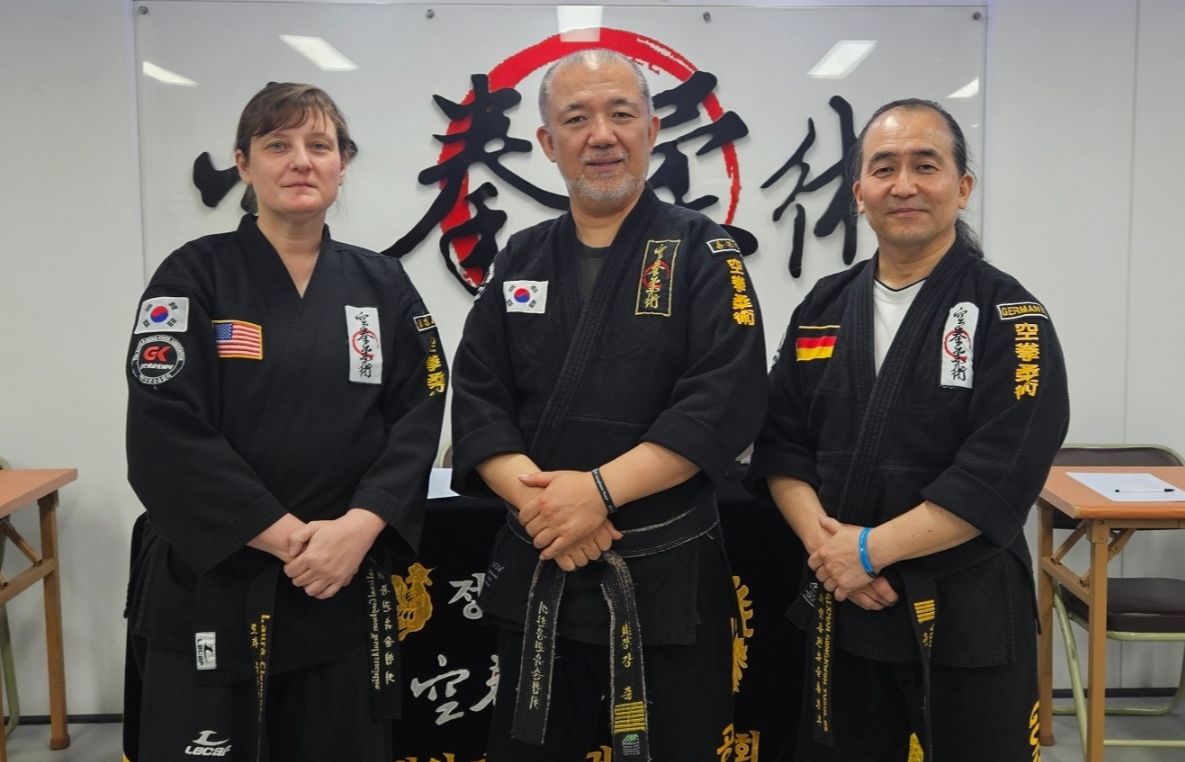
Founded in 1996 by Grandmaster Jun Kang, Gongkwon Yusul is a premier Korean hybrid martial art. It features a highly systematic curriculum designed to seamlessly fuse striking and grappling into one continuous, fluid motion.
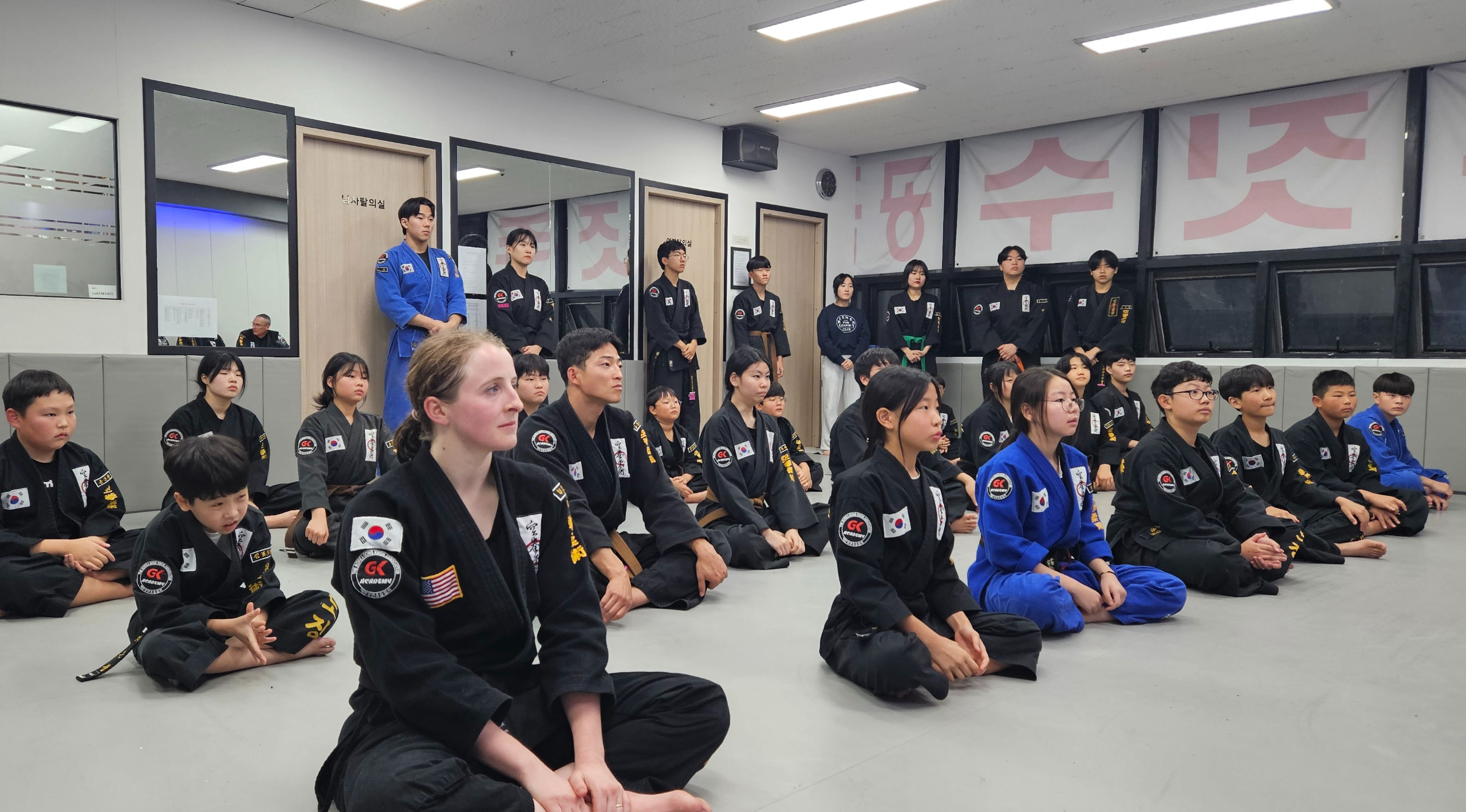
While it shares technical similarities with Mixed Martial Arts (MMA), Gongkwon Yusul practitioners train in a traditional martial arts uniform (Dobok) under strict safety rules and a deeply rooted code of etiquette. Because of this unique blueprint, it is engineered as an inclusive "social fitness and community-driven combat program" that anyone—regardless of age or gender—can safely enjoy without the risk of injury.
1. Core Technical System (The 4 Pillars)
To eliminate any technical gaps between fighting ranges, Gongkwon Yusul’s total training matrix integrates four key developmental phases. This ensures a seamless transition all the way from standing strikes to ground neutralization.
-
Command (Isolated Techniques): The foundational phase where practitioners perfect standalone striking and grappling mechanics, such as the jab, straight punch, low kick, shoulder throw, or armbar.
-
Combination (Linked Techniques): The integration phase where individual movements are chained together—such as executing a fluid punching-to-kicking routine, or transitioning instantly from a strike into a deep entry-throw.
-
Delivery (Spatial Management & Entry): The tactical phase focused on bridge-building and distance management. Practitioners learn the precise timing and footwork required to breach space and deliver techniques effectively.
-
Velocity (Speed & Timing): The optimization phase designed to maximize explosive power, acceleration, and split-second execution from the initial movement to the final submission or strike.
2. Standard Curriculum Roadmap (Stage-by-Stage)
Below is the standardized blueprint guiding a novice from day one to advanced technical mastery. Within approximately 6 months of consistent training, students naturally internalize the fundamental mechanics and overarching flow of the system.
- Phase 1: Foundations of Punching & Kicking (Months 1–3: Novice Stage)
-
Basic Sugi/Joksul-bon: Students master fundamental hand and foot mechanics rooted in structured boxing and kickboxing frameworks.
-
Diagonal Combinations: Practitioners drill 15 distinct continuous-striking patterns that cross-link hand and foot techniques organically, building essential combat rhythm and spatial awareness.
- Phase 2: Integrating Throws & Grappling (Months 4–6: Beginner Stage)
-
Judo-Style Throws (Yusul): Focuses on the physics, leverage, and precise timing needed to control an opponent’s collar or sleeve and throw them safely to the mats.
-
Foundational Groundwork (Wasul): Introduces ground defense and offensive submissions, utilizing joint locks and chokes (such as armbars and lapel chokes) closely aligned with modern Jiu-Jitsu principles.
- Phase 3: Advanced Applications & Sparring (Month 6+: Intermediate & Advanced Stage)
-
Samwon-bon Training: The absolute crown jewel of the Gongkwon Yusul program. This elite module perfects the complete hybrid combination: [Breaching with Striking ➔ Executing a Dynamic Throw ➔ Achieving a Split-Second Submission Upon Impact].
-
Paduk-style Sparring (Social Sparring): Rather than engaging in chaotic or emotionally driven brawling, students trade techniques smoothly and safely. Modeled after the strategy game of Paduk (Go), this method sharpens real-world reflexes like a physical game of chess.
3. Pedagogical Features: Why Choose Gongkwon Yusul?
-
Safe Practicality: While it incorporates full-range striking, takedowns, and submissions, the program enforces strict safety mechanisms—such as limiting direct full-force impact to the face—to keep training highly functional yet safe.
-
The Pioneer of Korean Jiu-Jitsu: In a traditional martial arts market that historically overemphasized standing combat, Gongkwon Yusul was a visionary pioneer, integrating sophisticated ground fighting systems (Wasul) early on.
-
A Fulfillment-Driven Blueprint: Instead of relying on agonizing, old-school endurance drills, the curriculum focuses on keeping sessions fresh and engaging. Because students learn dynamic new combination matrices every single week, it remains an exciting, lifelong hobby.